
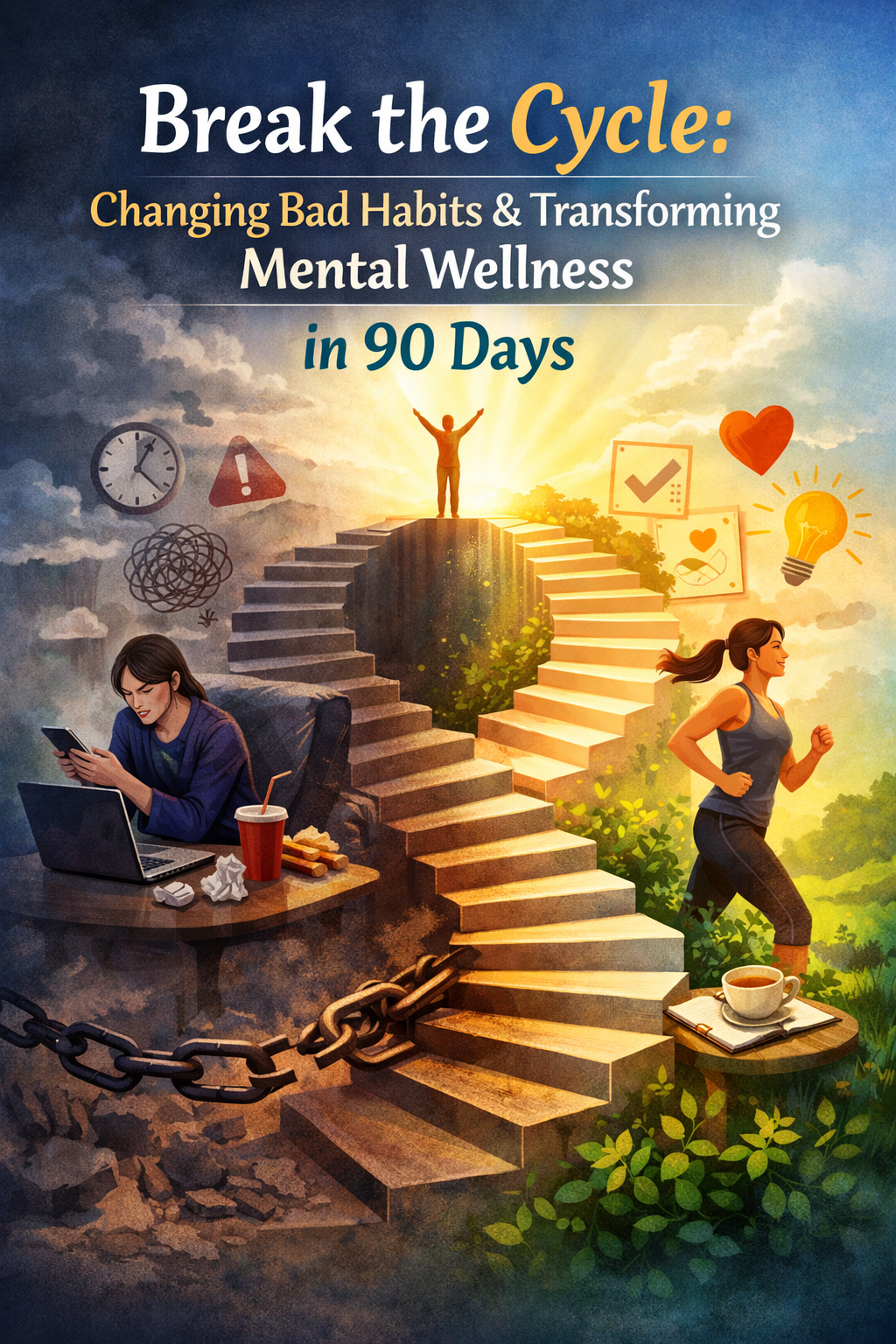
Break the Cycle: Changing Bad Habits and Transforming Mental Wellness in 90 Days
Break the cycle of anxiety, ADHD symptoms, and unhelpful habits with a focused 90-day transformation journey. This article explores how individualized coaching, practical habit change, and structured support can improve mental wellness, boost motivation, and increase daily focus. Discover how personalized therapy-informed life coaching in Kentucky can help you build sustainable routines, reduce overwhelm, and create lasting change in your mind and lifestyle.
We all develop habits—some helpful, some unhelpful, and some that quietly chip away at our mental health over time. For many people living with anxiety or ADHD symptoms, patterns like procrastination, doom scrolling, avoidance, overcommitting, self-criticism, or poor sleep don’t just “happen.” They’re learned responses the brain uses to cope, conserve energy, or temporarily reduce discomfort.
The good news: habits are learned, which means they can be reshaped.
With intentional structure, accountability, and individualized coaching, many people experience meaningful improvement in their anxiety and ADHD symptoms within 90 days—not because they “try harder,” but because they learn to work with their brain instead of against it.
Why habits matter so much in mental wellness
Mental wellness doesn’t usually change because of one big breakthrough moment. It changes because of dozens of tiny repeated choices. Habits directly affect:
mood regulation
focus and productivity
motivation and energy
self-esteem and self-talk
sleep quality and physical health
relationships and boundaries
For people with anxiety, habits often revolve around avoidance: avoiding uncomfortable conversations, tasks, uncertainty, or emotions. For people with ADHD symptoms, habits often revolve around inconsistency: bursts of motivation followed by burnout, forgotten plans, and unfinished tasks.
Changing habits changes the system that keeps symptoms going.
Why 90 days?
Ninety days is long enough to:
interrupt old patterns
build new neural pathways
practice consistency through successes and setbacks
see visible shifts in daily life
But it’s also short enough to feel doable. A 90-day framework gives you:
clear focus
a beginning and an end
measurable milestones
momentum instead of overwhelm
It’s not about “fixing” yourself in three months. It’s about creating sustainable patterns that continue working long after the 90 days are complete.
Coaching vs. trying to do it alone
Most people don’t struggle because they lack information. They already know they should sleep more, move their body, slow their thoughts, or make lists. The challenge is translating knowledge into consistent action.
Individualized coaching adds what Google and self-help books can’t:
external accountability you don’t have to “feel motivated” to use
personalized strategies that fit your brain and lifestyle
nonjudgmental feedback when old habits resurface
structure and pacing so change doesn’t feel chaotic
support during resistance when your nervous system says “nope”
Instead of forcing change through willpower, coaching helps you build systems that make good habits easier and automatic.
What “habit change” for anxiety can look like
With targeted habit coaching, many people experience:
less avoidance and more confident action
fewer spirals of “what if?” thinking
calmer physical responses to stress
improved sleep and energy
more balanced self-talk
Habits that often get addressed include:
scheduling worry time instead of letting worry run the day
practicing gradual exposure instead of avoidance
learning nervous-system regulation skills
replacing reassurance-seeking with confidence building
setting kinder internal language patterns
Anxiety lessens not because fear disappears, but because your life stops shrinking to accommodate it.
What “habit change” for ADHD symptoms can look like
ADHD isn’t a character flaw or a lack of discipline—it’s a brain that’s wired for interest, novelty, and urgency. Coaching focuses on making life work with that wiring instead of constantly fighting it.
Clients often work on:
building realistic routines (not “perfect” ones)
creating external reminders instead of relying on memory
breaking tasks into small, actionable steps
managing time blindness
reducing clutter and digital overwhelm
strengthening transitions and follow-through
Many people notice improvements in focus, organization, and daily functioning within 90 days when strategies finally fit their brain instead of someone else’s.
What a 90-day individualized coaching journey typically includes
While every person is unique, a common structure may look like:
Weeks 1–3: Awareness and foundations
mapping current habits and triggers
understanding your nervous system and attention style
establishing sleep, movement, and basic self-care baselines
Weeks 4–8: Skill building and habit rewiring
replacing unhelpful patterns with practical alternatives
practicing new tools daily with accountability
troubleshooting real-life challenges as they arise
Weeks 9–12: Integration and maintenance
strengthening routines
preventing relapse into old habits
building confidence and independence with new skills
The focus is not perfection—it’s progress, compassion, and sustainable change.
Important note about treatment and safety
Coaching can be incredibly powerful, and for many people it works best alongside therapy, medication management, or other medical care when appropriate. ADHD and anxiety are real mental health conditions; individualized coaching supports habit change and symptom management but does not replace professional diagnosis or treatment.
If you ever experience thoughts of harming yourself or others, or your symptoms significantly interfere with daily functioning, it’s important to seek licensed mental health care immediately.
Your next step
You don’t have to stay stuck in the same patterns.
If you’re ready to:
change unhelpful habits
feel more calm, focused, and confident
build systems that finally work for your brain
make measurable progress in the next 90 days
individualized coaching can help you get there step by step.
Achieving Meaningful and Enduring Change Through Therapy
How to recognize if therapy is working for you.

Assessing the Effectiveness of Therapy
To determine if therapy is yielding beneficial results, individuals should observe sustained, long-term changes in their thoughts, emotions, and behaviors. True therapeutic progress transcends the need for an ongoing physical presence in the therapy setting, reflecting genuine transformation rather than temporary relief.
Many individuals may attend therapy for extended periods without experiencing significant, lasting changes. In such cases, they may find the sessions helpful for discussion but lack in concrete improvement. This typically indicates that essential second-order change has not been achieved.
Indicators of Therapeutic Progress
• Shift in Perspective: A fundamental change in outlook toward personal challenges or life as a whole, often resulting in more flexibility or optimism.
• Change in Core Beliefs: Deep-seated beliefs and assumptions begin to evolve, making way for new and healthier perspectives.
• Unexpected Breakthroughs: Transformational insights occur, leading to notable shifts in understanding or behavior beyond incremental improvements.
• Emotional Responses: Reactions to situations become noticeably different, suggesting positive adjustments in emotional processing.
• Sustainable Changes: Improvements are enduring and seamlessly integrated into daily routines, rather than being short-lived or feeling unnatural.
• New Coping Strategies: Development of more effective and healthier mechanisms for managing stress or difficult situations.
• Relationship Dynamics: Significant positive changes emerge in interactions with others, promoting healthier and more balanced relationships.
If these changes are not observed, it is advisable to discuss concerns directly with your mental health provider to collaboratively evaluate and potentially adjust the therapeutic approach. Should there be no measurable progress within 6–8 weeks, please consider reaching out to us for further assistance.